A RED GRAPE · CHIANTI CLASSICO
Sangiovese
Cherry, savory, bright acid.
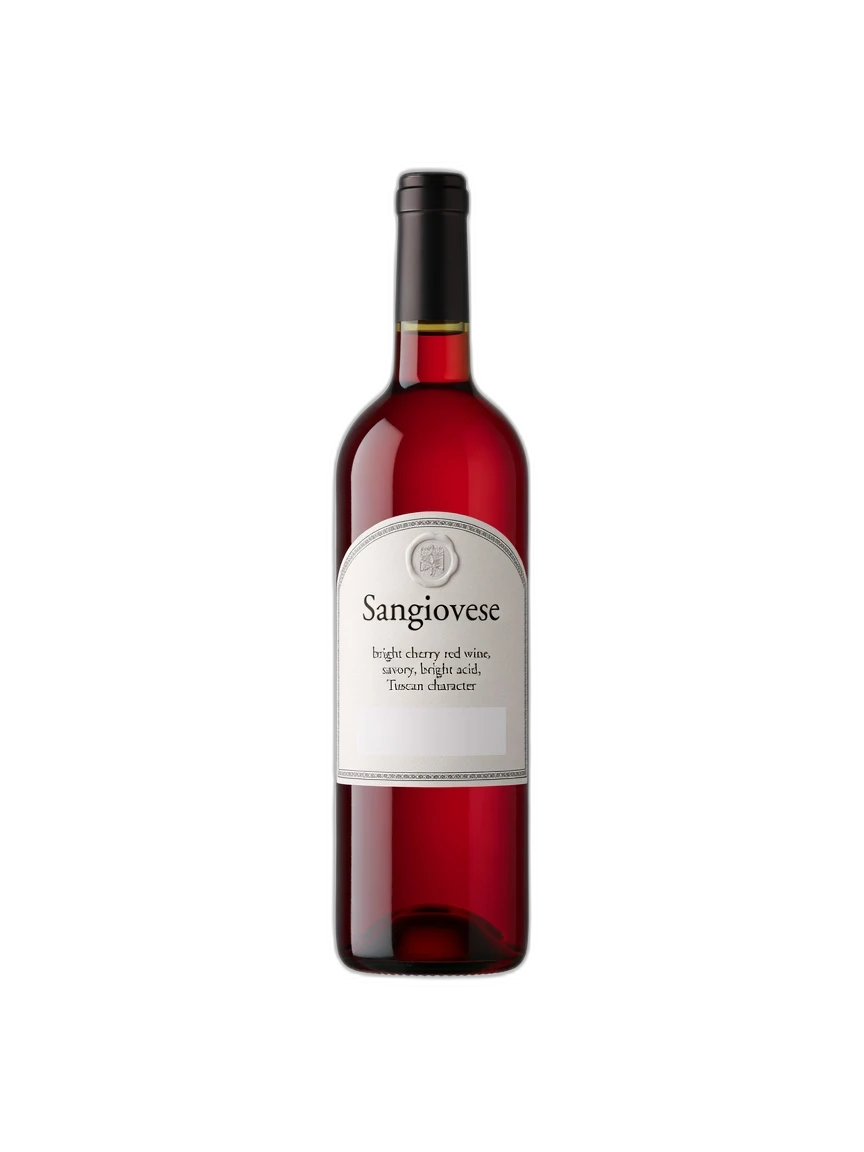
What Sangiovese tastes like
Sangiovese is a red grape. In the glass it reads as cherry, savory and bright acid. Sangiovese is full-bodied, with firm tannin and high, racy acidity, finishing dry. A little oak is common. Its home turf, as we hold it, is Chianti Classico, Montalcino.
Where Sangiovese grows
Our appellations table names Sangiovese in 33 wine regions. The ones with the most wines in our database are Brunello di Montalcino (Italy), Tuscany (Italy), Chianti Classico (Italy), Bolgheri (Italy), Chianti Classico Riserva (Italy), Rosso di Montalcino (Italy), Montalcino (Italy), Brunello di Montalcino Riserva (Italy), Super Tuscan (Italy), Chianti Classico Gran Selezione (Italy), Patrimonio (France) and Chianti (Italy).
Sangiovese is grown well beyond that list: 21 more appellations name it as a main grape, which is part of why one bottle can taste so different from the next.
How the place changes the glass
- Brunello di Montalcino (Italy): Structured, age-worthy Sangiovese with cherry, violet and mineral precision; firm tannins reward cellaring. Climate: warm, dry Mediterranean-influenced, with a marked diurnal range at altitude.
- Tuscany (Italy): Diverse range from fruit-forward to complex; no single style defines the broad IGP. Climate: warm, Mediterranean.
- Chianti Classico (Italy): Elegant, age-worthy reds with structured tannins, acidity, and complex red and dark fruit profiles. Climate: warm Mediterranean continental.
- Bolgheri (Italy): Bold, international style. Bordeaux-grape dominant in Bolgheri. Climate: mediterranean.
What to eat with Sangiovese
The classic partners are bistecca, ragù and pecorino. Its tannin wants fat and protein on the plate, so rich meats and aged cheeses suit it.
Sangiovese on menus we hold
- Tomato from the north of Vaud at Restaurant de l'Hôtel de Ville: paired with Predappio Sangiovese di Romagna Superiore Chiara Condello (2022). Terracotta tile, a battered leather satchel, a long walk home.
- Tomato tartlet at CORE by Clare Smyth: paired with Toscana Sangiovese Case Basse, Soldera (2013). Warm terracotta, a long table under the pergola, and children running.
Sangiovese in our cellar
The appellations above account for about 7,011 Sangiovese wines in the Sommurai database, which is how we know which regions pour it most.
Grapes to try next
If you like Sangiovese, these red grapes are worth a glass: Pinot Noir, Cabernet Sauvignon, Syrah, Merlot, Grenache and Cabernet Franc.
Quick answers
What does Sangiovese taste like?
Sangiovese reads as cherry, savory and bright acid. Sangiovese is full-bodied, with firm tannin and high, racy acidity, finishing dry. A little oak is common.
What food goes with Sangiovese?
bistecca, ragù and pecorino.
Where is Sangiovese grown?
Our appellations table names Sangiovese in 33 wine regions, including Brunello di Montalcino (Italy), Tuscany (Italy), Chianti Classico (Italy), Bolgheri (Italy) and Chianti Classico Riserva (Italy).
Open it in the app
Pair every dish on a menu with a wine you can order: scan a menu, swipe the pairings, explore restaurants, wineries and hotels.